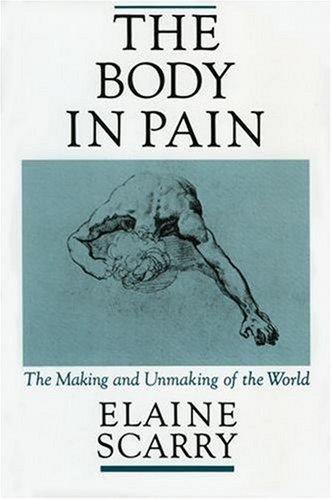
I went in a little scared of this one, which turned out to be the right instinct. Scarry’s opening claim is that pain, unlike any other state of consciousness, has no object, it doesn’t point at anything the way fear points at a threat or love points at a person, and language built for pointing-at-things just fails in front of it. From there she builds out through torture, through war, through the Bible and Marx, arguing that the whole structure of making and unmaking the world runs through this basic problem of a body that hurts and can’t say so clearly.
The torture chapters are the hardest reading I’ve done in a while, not gratuitous, but exact in a way that sits with you. Her point about how societies sanitize torture to make it emotionally survivable for everyone but the person experiencing it felt uncomfortably current, waterboarding gets an explicit mention and it lands. I took this in slow chunks too, there’s a kind of reader who needs to split a book like this into bite-size pieces even with philosophy training, and I don’t think that’s a knock on the writing so much as an honest description of what it’s asking of you.
I don’t fully buy the strongest version of her claim, that pain is simply and totally beyond language, plenty of people manage to describe it with real precision. But the weaker, truer version underneath, that our language for pain is thin compared to how much of it we all eventually carry, stuck with me completely. Four stars, and one I suspect I’ll return to in smaller doses rather than start to finish again.